
All the things you need to know.
To get the most out of your training, there are some things that would be really good to know.
How read exercise instructions
Rate of Perceived Exertion (RPE)
Self Myofascial Release (SMR)
Common Cues
Read below to learn about each one and how it can help take your training to the next level.

How read exercise instructions
Exercise name @3111, 115#, 3x15/side ; 1 min rest
Okay, let’s break this down.
@3111 - Tempo, see the next section
115# - #=lbs. Simple. Weight assigned is always total weight. - Example : Alternating bicep curls 60# = 60lbs total, 30lbs in each hand.
3x15/side -3 sets of 15 each side. If it’s a single sided exercise, do all on non-dominant side before repeating on the dominant side. Both sides count as one set. If the exercise is meant to be alternating sides, it will be annotated accordingly.
Tempo
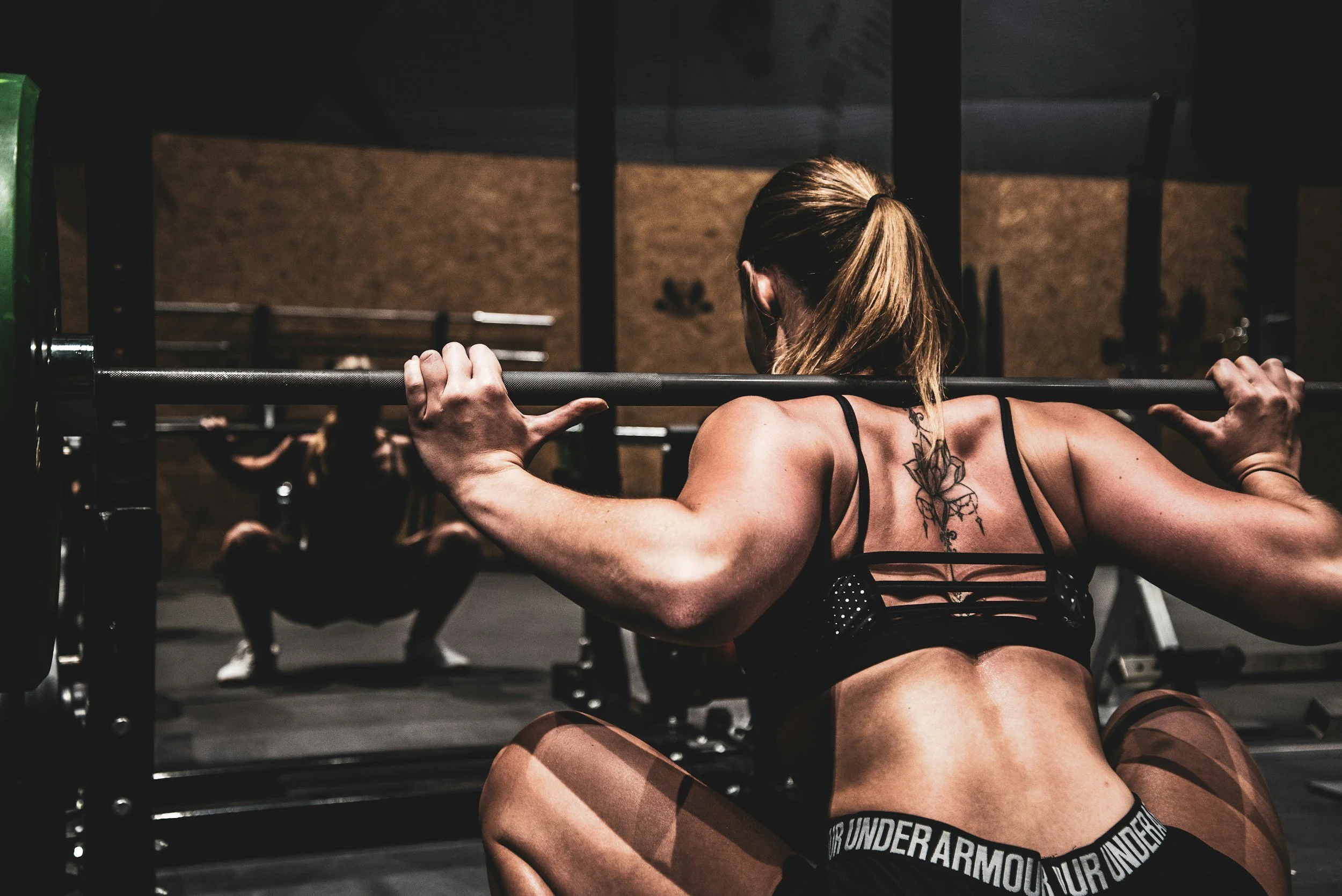
Tempo is the speed and amount of time you spend during each phase of each repetition. It is a variable to each exercise of a workout like repetitions/weights/sets. Tempo has an immense influence on
what muscle fibers you are targeting
what benefits you’re focusing on such as power/endurance
mitigating risk of injury
You’ll see it as @ECPC
Tempo is often written out as 4 numbers representing seconds or counts prescribed for each of the 4 contraction phases of 2 count exercises. This does not work for Turkish Get-Ups or any other combo exercises. (X)= explosive/as fast as possible
Eccentric - Going with the weight. Producing less force than the resistance. Going down during a barbell back squat or a deadlift. Going up on a cable lat pulldown machine.
Pause - I’m not going explain what a pause is. However, maybe it’s a rest, maybe it’s an actual hold. Either way, use that time to make sure the right muscular systems are working.
Concentric - Going against the weight. Producing more force than the resistance. Going up on a barbell back squat, push-up, deadlift, bicep curl. Pulling down on a cable lat pulldown machine, Cable rope tricep pulldown.
Pause - Same as number 2.
Examples
Romanian Deadlift @31X1
Push-ups @4212
Romanian Deadlift @31X1- Since we start on the 3rd number , you’re going to come up as fast as possible, pause for 1 second, then take 3 seconds to return the bar all the way back down to the starting position, pause for another second before repeating for the next repetition.
Push-ups @4212 - If you’re starting from the top position, Take 4 seconds to lower yourself to the floor, hold the bottom with your body slightly off the floor for 2 seconds, then extend back up quickly to the top (1 second), hold top for 2 seconds before repeating for the next repetition.
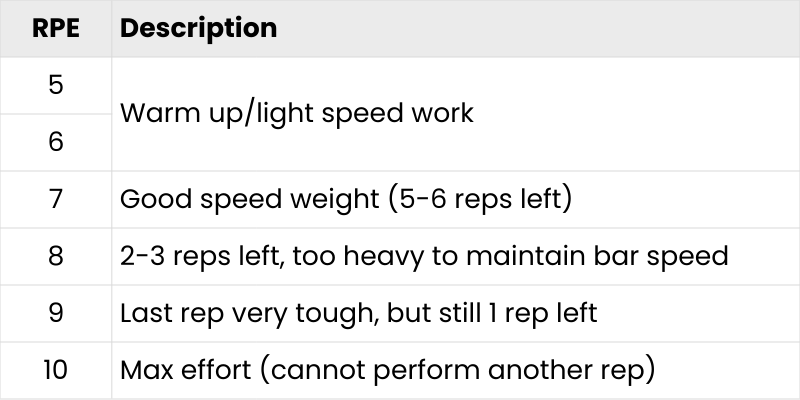
RATE OF PERCEIVED EXERTION (RPE)
Rate of perceived exertion (RPE) is a way for trainers and coaches to communicate how challenging a set of exercises should be, and it’s also a way for clients and athletes to communicate how challenging a set of exercises actually feels.
Self Myofascial Release (SMR)
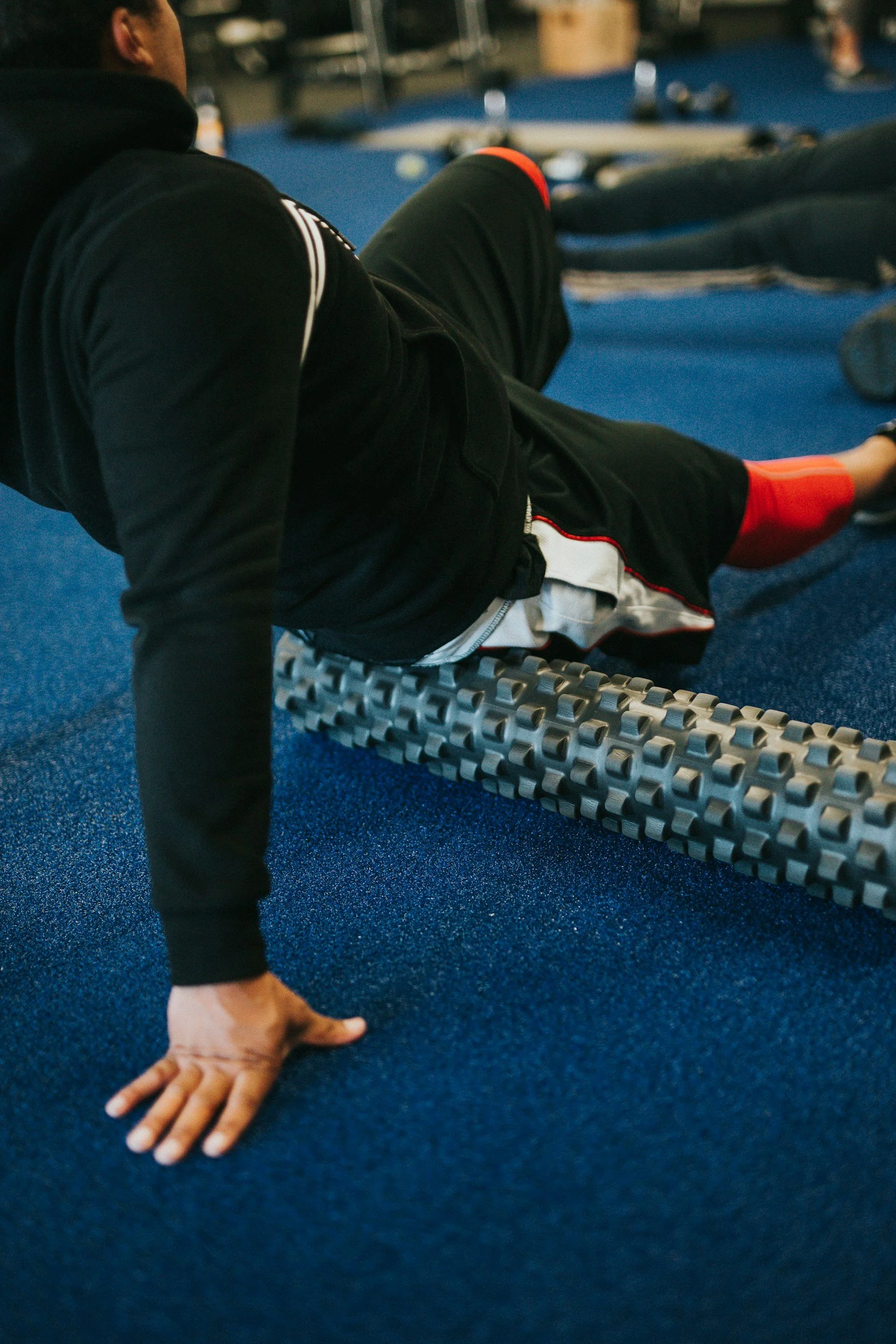
Foam rollers, lacrosse balls, or percussive massagers such as theraguns
Myofascial release can help relax overactive muscles and fascia, improve circulation, improve neuromuscular efficiency, decrease neuromuscular hypertonicity and set the stage for correcting compensations that otherwise could lead to serious orthopedic injuries.
Trigger-point release - Release, relax, inhibit tight overactive muscles/soft tissue. Find a tender spot and relax into it. Using the calves as an example, start by sitting on the floor with the roller under both of your calves or targeting just one by having one other leg crossed over the other for more pressure. Roll very slowly (about 1in/2cm every second) until you find a tender spot. When you find that tender spot, stop and relax your calf into the roller for a minimum of 30 seconds or until the tenderness dissipates. If the intensity of the tenderness was measured on a scale from 1 to 10, you should start with a 4 or 5. This process helps activate the golgi tendon organ which signals the nervous system to help relax the muscle and prevent compensative overuse. This process also helps relax the fascia, and the nervous system associated with the targeted area. This should be done before static or dynamic stretching at the beginning of a workout on muscles that tend to be overactive. For most people, this would include calves, quads, hip flexors, and pecs/ lats. This can also be done at the end of a workout to help mitigate delayed onset muscle soreness.
Biphasic - Warm up the muscles before a workout, reduce risk of spasms/cramps, improve performance. Roll back and forth on the roller, then flex/extend. Using the calves again as an example, almost everything is the same except instead of scanning for a trigger point or tender spot, you keep rolling back and forth for a minimum of 30 secs. This still helps relax the muscle and fascia but to a lesser degree but also helps stimulate blood flow in the region and helps warm up and prime the targeted muscles. This can be done at the beginning of a workout before dynamic stretches, which help prime the joints. Then flex/extend joint associated with the muscle for max effect.